
In a meeting yesterday my colleague Durga shared her motto with us:
Imperfection is perfection.
Vicki and I paused: that this is a powerful statement! Only it didn’t truly click for me, why it was such an impactful statement until I picked up The Book of Wilding (Tree & Burrell, 2023) in the evening. This is a post about the power of imperfection, life-wide learning and gardening.
the power of imperfection
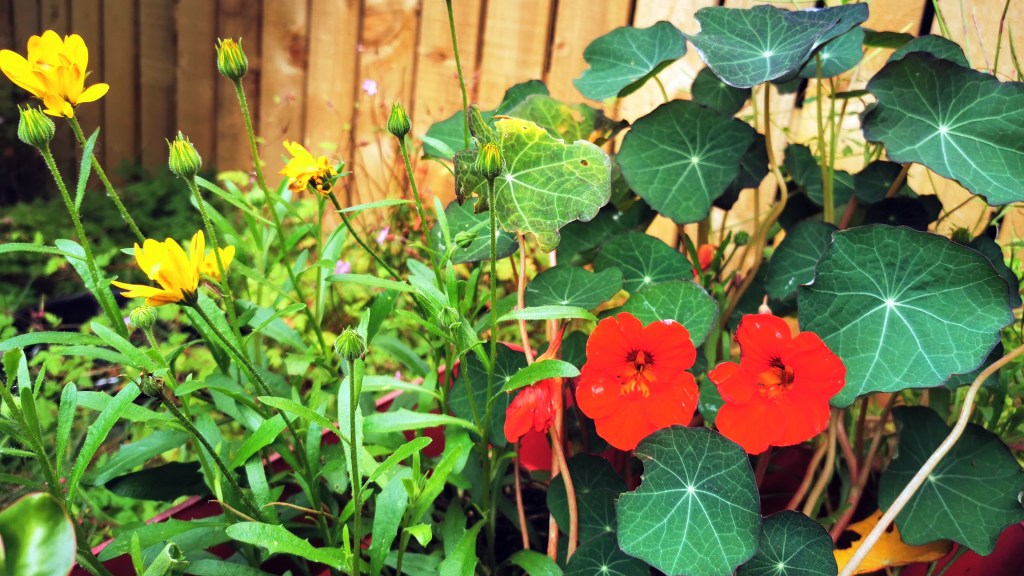
One of the tips for gardeners who want to rewild their patch is of course to forego herbicides and maybe letting some of the weeds remain: embracing imperfection. After all, the authors say, weeds are valuable native plants.
This is, in fact, how I moved my partner away from being highly suspicious of weeds, which must be rooted out, to embracing imperfection. We would play “Is this a weed or useful plant?” one year. I would provide the medicinal, nutritional or environmental facts about “weeds” such as stickweed, plantain, spearwort, poppies, Alchemilla, daisies, comfrey, and lung worth. And thus we slowly but steadily gave each weed a name and purpose, and the bumble bee and butterfly population has grown steadily. This spring we even had honeybees visiting the garden for the first time since I have lived here.
name your imperfections
Now I have begun to wonder, what if we do the same for our imperfections. What if we give them a name and purpose? Maybe, just maybe, we will recognise their importance for our inner ecosystem? Maybe making a little bit of curated space for our imperfections aids our personal rewilding: growth, and a more balanced mind?
Maybe that tuft of jealousy shows us what we want to do or achieve? And encourages us to question what nourishment we need from this weed to move us to where we want to be?
Maybe the spinney of annoyance (or even anger) shows us where our boundaries were breached? And encourages us to consider if we aided that breach and how we can build a stronger fence? Actually, it should be a hedge, if we are committed to rewilding. The hedge is a healthier boundary; it allows flexibility in letting things through when necessary.
Maybe that fallow project–that has been gathering dust for the last 18 months, and kept slipping to the bottom of the to do list–shows us where we don’t want to be anymore? What topics have become obsolete? Which plants don’t thrive in our garden?
Maybe the thicket of “yes” needs some serious pruning? It shows us our curiosity, care, commitment, or fear of missing out, and not so gently tells us that if we don’t prune the “yes” it might overgrow the whole garden
the importance of imperfection
In The Book of Wilding the authors propose that rewilding our garden is a fine balance between curation and letting go. Letting go is important for growth, bio-diversity, and a healthier environment. And curation is important to foster areas that need a bit of help, and prevent invasive species from taking over.
If we ignore our imperfections, like brambles, they will soon cover the whole garden. If we name them, appreciate their usefulness, curate them deliberately and carefully, our inner garden is going to be more healthy, balanced, and diverse.
Diversity of thought and expanding emotional capability: being able to hold different perspectives, translating a weed that “ought to be rooted out” into a plant that is “a valuable part of the garden”, is becoming more and more important. Embracing our imperfect inner gardens and tending tenderly to the weeds might be one of the most important acts of citizenship we can engage in.
Reference
Tree, I., & Burrell, C. (2023). The book of wilding: A practical guide to rewilding big and small. Bloomsbury Publishing.
 Nathalie Tasler, PhD, SFHEA, MPhil, PGDip CCM, PGCert LTHE